
Gum disease is a prevalent problem affecting millions globally. It harms the integrity of the soft tissues surrounding your teeth and also the underlying jawbone. Early detection and prompt treatment pave the way for improved oral health. Fortunately, modern dentistry has evolved in recent decades and replaced traditional gum disease treatment through laser technology.
The periodontist in King of Prussia, PA, and their expert team offer gum disease treatment through LANAP. But what is LANAP? Read on to find out everything about this minimally invasive periodontal treatment.
What is gum disease?
Gum disease is mainly the result of infection and inflammation of the gums and bones (periodontium) that surround and support the teeth. In its early stage, called gingivitis, the gums can become swollen and red, and they may bleed. In its more serious form, periodontitis, the gums can pull away from the tooth, bone can be lost, and teeth may loosen or even fall out. Periodontal disease and tooth decay are the two biggest threats to dental health.
It is caused by:
- Poor oral hygiene
- Hormonal changes
- Smoking
- Certain medications
- Genetics
What are the symptoms of gum disease?
- Red, swollen gums
- Tender, painful gums
- Bad breath (halitosis)
- Bleeding gums
- Pain when chewing
- Poor bite due to malocclusion
- Receding gums
- Increased tooth sensitivity
- Loose teeth
How is gum disease treated through LANAP?
Earlier advanced gum disease was treated through traditional surgical procedures. However, currently, most periodontists opt for LANAP.
Laser-Assisted New Attachment Procedure (LANAP) is performed in the following way. Your dentist will:
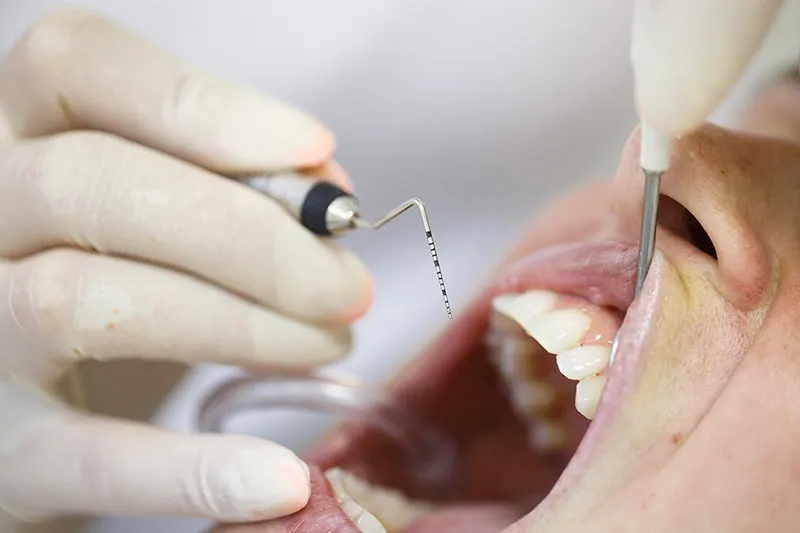
- Probe your gums to determine the attachment level and the extent of gum loss for each tooth.
- Use a laser that targets disease-causing bacteria.
- Use ultrasonic scales and other instruments to remove disease-causing calculus.
- Use the laser beam again to connect the gum tissues back to the root.
- Adjust the tooth surfaces to further prevent the formation of new calculus.
The entire procedure may take an hour or two but healing is quick with optimal recovery and long-lasting results. The recovery time is around 24 hours, unlike the traditional 2-4 weeks. However, there are minimal to no complications arising post LANAP.
Conclusion
Most patients suffering from gum disease can greatly benefit from LANAP. Because this is a laser-assisted procedure instead of a traditional surgical intervention. It offers quick healing, with minimal recovery time. Consult your dentist and discuss your expectations with them. They will help determine if LANAP is a suitable treatment for your oral needs.
