
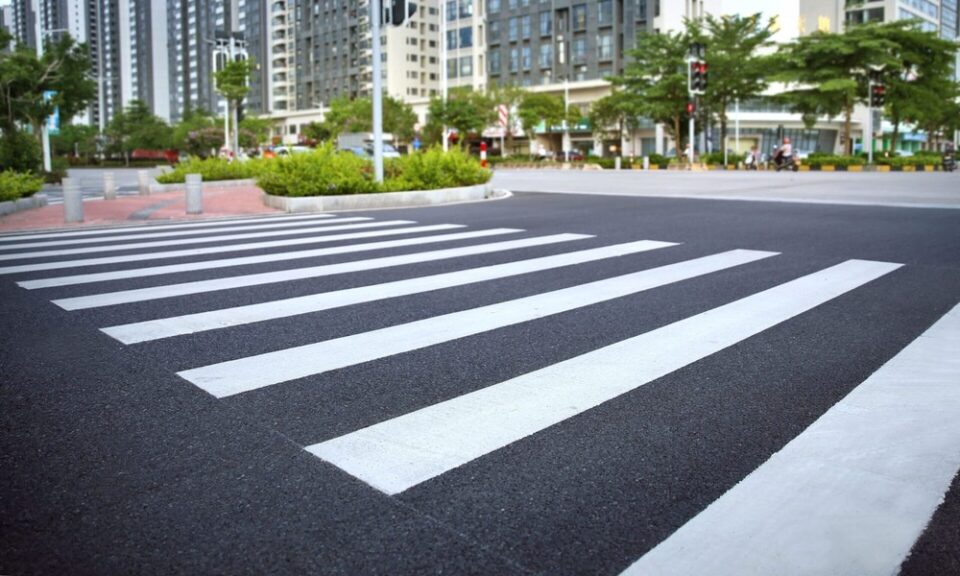
Journal Square sees thousands of pedestrians every day. Commuters move between the PATH station and the office towers above it, students cut across to Saint Peter’s University, and shoppers and diners walk along Kennedy Boulevard at nearly every hour. With that volume comes risk. A single distracted driver pulling out of a side street or rolling through a yellow light can change a person’s life in seconds. When that happens, what the pedestrian can recover often comes down to a few specific provisions of New Jersey law and how they apply to the moment of the crash. The Law Offices of Anthony Carbone has handled these cases throughout Hudson County for more than 35 years, and the patterns are consistent enough that anyone hit while walking should understand them before talking to an insurance adjuster.
How New Jersey Defines Pedestrian Right-of-Way
The core statute is N.J.S.A. 39:4-36. Drivers must stop and stay stopped for pedestrians within marked crosswalks at intersections without traffic signals, and they must yield to pedestrians inside any unmarked crosswalk at an intersection. That duty extends across the half of the roadway the driver is traveling on, plus enough additional space that the pedestrian is not endangered while continuing across.
Two details inside that statute carry weight in nearly every Journal Square case. The driver’s duty is to stop, not simply to slow. A driver who decelerates and rolls through while a pedestrian is mid-crossing has violated the statute even when no contact would have occurred. The second detail is that the duty applies to unmarked crosswalks at intersections as well. Many Jersey City corners do not have painted lines, but the legal crosswalk still exists at the natural extension of the sidewalks across the intersection.
A pedestrian struck inside one of these zones starts the case with a strong liability position. A police report citing the driver under 39:4-36 is one of the most useful pieces of evidence a personal injury claim can have.
When the Pedestrian Was Outside a Crosswalk
The picture changes when the impact happens mid-block or against a signal. New Jersey requires pedestrians crossing outside a crosswalk to yield to vehicles. That does not end the claim, but it shifts the analysis to comparative negligence. A pedestrian found 30 percent responsible for the collision can still recover, with the award reduced by that percentage. A pedestrian found more than 50 percent at fault is barred from recovery under the modified comparative fault rule at N.J.S.A. 2A:15-5.1.
Drivers in dense areas like Journal Square still owe a heightened duty of care. A driver who saw or should have seen the pedestrian, and had time to brake, remains liable for the portion of fault tied to that failure. Surveillance footage from surrounding businesses, dashcam video from buses and rideshare vehicles, and signal timing records from the city’s traffic department often determine where that line lands.
Insurance Realities Most Pedestrians Do Not Expect
Pedestrians in New Jersey are usually covered by personal injury protection benefits even though they were not in a vehicle. The order of priority is set by the No Fault Act. A pedestrian who owns a car turns first to their own auto policy for PIP. A pedestrian who lives with a relative carrying auto insurance can use that relative’s PIP coverage. A pedestrian with no household auto coverage typically recovers PIP through the policy of the vehicle that struck them. If the striking vehicle was uninsured, the New Jersey Unsatisfied Claim and Judgment Fund becomes the source of last resort.
PIP pays medical bills and a portion of lost wages regardless of fault. The bodily injury claim against the driver, which covers pain, suffering, permanent injury, and economic loss beyond PIP limits, runs separately and depends on the verbal threshold or full tort election on the relevant policy.
How The Law Offices of Anthony Carbone Approaches These Cases
Pedestrian collisions move from the scene to a paperwork battle quickly, and the early steps shape the outcome. Securing the police report and any video footage before it is overwritten matters. Identifying every available source of insurance matters too, including any umbrella policy on the driver and any resident-relative coverage on the pedestrian’s side. Medical documentation has to tie cleanly to the specific impact, which becomes harder when a pedestrian has prior orthopedic issues that the defense will try to blame for the current symptoms.
Adjusters often open low in pedestrian cases, hoping the injured person will accept rather than fight. The cases that resolve well are usually the ones where the pedestrian had counsel involved before any recorded statement was given, before any medical authorization was signed, and before the cameras around Journal Square were overwritten.
What to Do This Week if You Were Hit
Anyone struck near Journal Square, Grove Street, Newport, or anywhere else in Hudson County should treat the first week after the crash as decisive. Get medical care, document the scene as fully as possible, and avoid recorded conversations with the driver’s insurer until a lawyer has reviewed the situation.
The Law Offices of Anthony Carbone offers a free consultation for pedestrian accident victims throughout New Jersey. Reach out to discuss the specifics of the crash, the insurance picture, and a realistic look at the claim before deadlines and statutes start working against you.
